
Your commercial building’s electrical panel is the central nervous system of your entire power distribution network. When it begins to fail, the consequences range from minor inconveniences to serious safety hazards and costly business interruptions. Commercial electrical panel repair or replacement becomes necessary when you notice persistent breaker trips, burning odors, visible corrosion, or panels that exceed their 25 to 40 year service life.
Recognizing these warning signs early allows you to address problems before they escalate into emergency situations that threaten both safety and your bottom line.
Why Commercial Panels Fail Differently Than Residential Systems
Commercial electrical systems operate under fundamentally different conditions than residential setups. Your business likely runs higher amperage loads for extended periods, often 12 to 24 hours daily. Equipment like HVAC systems, refrigeration units, and manufacturing tools create sustained demand that residential panels never experience.
This constant stress accelerates wear on breakers, bus bars, and connections. Commercial panels also serve more circuits and handle three-phase power in many cases, adding complexity that increases potential failure points. The environment matters too. Warehouses, restaurants, and manufacturing facilities expose panels to heat, moisture, dust, and vibration that residential panels avoid.
Frequent Breaker Trips Signal Underlying Problems
Occasional breaker trips protect your system from overloads. Frequent trips, especially on the same circuit, indicate a problem requiring professional attention. The issue might be a failing breaker itself, loose connections creating resistance and heat, or genuine circuit overload from equipment demands exceeding the original design.
When a breaker trips repeatedly, business owners often just reset it and move on. This creates a dangerous pattern. Each trip indicates the breaker is doing its job by interrupting a potentially hazardous condition. Ignoring the root cause puts your building, equipment, and occupants at risk. Professional troubleshooting identifies whether you need circuit modifications, breaker replacement, or panel upgrades.
Burning Smells and Visible Damage Require Immediate Action
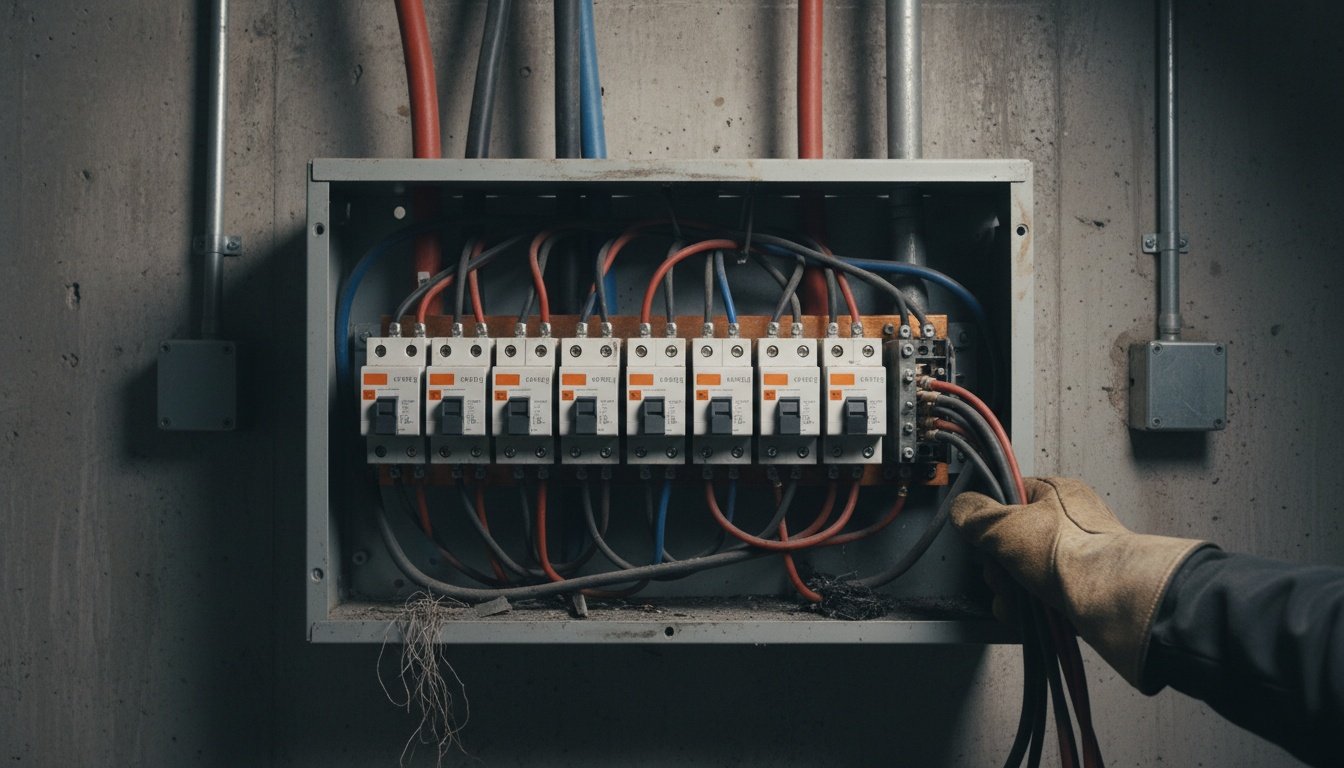
A burning odor near your electrical panel is never normal. This smell indicates overheating components, melting insulation, or arcing connections. You might also notice discoloration on the panel cover, breakers, or surrounding wall. These scorch marks reveal temperatures high enough to damage materials.
Visible rust or corrosion on panel components signals moisture intrusion. Water and electricity create multiple hazards, including shock risk and compromised connections that generate heat. Corrosion weakens mechanical connections between breakers and bus bars, increasing resistance and creating hot spots.
If you observe any of these conditions, treat it as urgent. Do not wait for a convenient time to schedule service. The progression from warning signs to catastrophic failure can happen quickly.
Panel Age and Obsolete Technology in Greenville Businesses
Electrical panels installed before the 1990s often lack modern safety features and capacity for current business needs. Many commercial buildings in Greenville and eastern North Carolina still operate with panels from the 1970s or 1980s. These systems were designed for much lower electrical loads than modern businesses demand.
Certain panel brands manufactured between 1950 and 1990 have known defect histories. Federal Pacific Electric (FPE) and Zinsco panels fail to trip properly during overload conditions in documented testing. If your building has one of these brands, replacement is a safety priority regardless of apparent function.
Technology improvements over the past 30 years include better arc-fault protection, ground-fault protection for personnel safety, and more reliable breaker mechanisms. Upgrading brings these protections to your business.
Six Clear Warning Signs Your Panel Needs Professional Attention
Recognizing specific indicators helps you act before small problems become emergencies. Watch for these signs:
- Breakers that feel hot to the touch during normal operation indicate excessive current or poor connections.
- Flickering lights when equipment starts suggests voltage drops from inadequate panel capacity or loose connections.
- Buzzing or crackling sounds from the panel reveal arcing, loose components, or failing breakers.
- Rust, corrosion, or water stains on or around the panel enclosure show moisture problems.
- Breakers that will not reset or stay in the on position have failed mechanically.
- Burn marks, melted insulation, or discolored components indicate dangerous overheating.
Any single item on this list warrants professional evaluation. Multiple signs mean your panel has likely reached the end of its safe service life.

How Increased Power Demand Outgrows Your Existing Panel
Business growth and technology changes often create electrical demands your original panel cannot safely handle. Adding computers, servers, specialized equipment, or expanding your facility increases load. Your panel has a maximum amperage rating, typically 100, 200, 400, or 600 amps for commercial buildings.
When your actual demand approaches 80 percent of panel capacity, you have entered the zone where upgrades become necessary. Operating at or above capacity creates sustained stress on every component. Breakers, bus bars, and main lugs generate excess heat that accelerates failure.
A professional load calculation determines whether your current usage exceeds safe limits. This calculation considers all connected equipment, lighting, HVAC, and anticipated future needs. The results guide decisions about whether repair suffices or whether you need panel replacement and service upgrades.
The Hidden Costs of Delaying Panel Repairs
Business owners naturally want to defer capital expenses, but delaying necessary electrical panel work carries costs that often exceed the repair investment. Equipment damage tops the list. Voltage fluctuations and power quality issues from failing panels shorten the life of computers, motors, and electronics.
Downtime costs vary by business type but often reach hundreds or thousands of dollars per hour. An emergency panel failure forces complete shutdown until repairs are complete. Emergency service rates and expedited parts add to expenses.
Insurance implications matter too. If an electrical fire or incident occurs and investigators find deferred maintenance or known defects, your coverage may be compromised. Similar to how electrical testing identifies hidden safety hazards in homes, commercial inspections reveal problems before they cause losses.
When Repair Makes Sense Versus Full Replacement
Not every panel problem requires complete replacement. Individual breaker failures, minor connection issues, and isolated component problems often respond well to targeted repairs. A qualified electrician evaluates the overall panel condition, age, and extent of problems to recommend the most appropriate solution.
Repair makes economic sense when the panel is relatively modern, the problem is isolated, and the system capacity still matches your needs. Replacement becomes the better choice when you face multiple issues, the panel exceeds 30 years of age, you need additional capacity, or safety recalls affect your equipment.
Panel replacement during planned renovations or expansions often costs less than standalone projects. Coordinating electrical upgrades with other construction work reduces labor costs and business disruption.

Code Compliance and Insurance Requirements
Building codes and electrical standards evolve to reflect improved safety understanding and changing technology. Panels installed decades ago met the codes of their time but may fall short of current requirements. While existing installations are typically grandfathered, any modification or repair must bring affected components up to current code.
Insurance companies increasingly require electrical system inspections for older commercial buildings. They recognize that outdated or poorly maintained electrical systems create significant risk. Some insurers mandate upgrades as a condition of coverage renewal. Others adjust premiums based on system age and condition.
Professional testing and documentation provides proof of system safety and code compliance. This documentation protects you during insurance reviews and demonstrates due diligence in property management.
What Professional Panel Evaluation Includes
Comprehensive panel evaluation goes beyond visual inspection. Qualified electricians use thermal imaging to detect hot spots invisible to the naked eye. These temperature variations reveal loose connections, overloaded circuits, and failing components before they cause obvious problems.
Load testing measures actual current draw on individual circuits and the main service. This data shows whether your system operates within safe parameters. Voltage measurements identify imbalances between phases that stress equipment and reduce efficiency.
Connection integrity testing checks torque on terminations, bus bar condition, and ground continuity. Many panel failures trace back to connections that loosened over time due to thermal cycling. Tightening connections to manufacturer specifications often resolves multiple symptoms.
Panel evaluation should include a review of your business needs and growth plans. This forward-looking approach ensures any upgrades provide capacity for anticipated expansion rather than just solving immediate problems.
Protecting Your Business With Proactive Electrical Maintenance
Your commercial electrical panel deserves the same attention you give other critical building systems. Regular professional inspections catch developing problems early when repairs cost less and cause minimal disruption. Most experts recommend annual inspections for commercial panels, with more frequent checks for high-demand environments.
Maccripine Electric Service LLC brings over 18 years of experience diagnosing and resolving commercial electrical issues. Recognizing warning signs and acting promptly protects your property, ensures business continuity, and maintains a safe environment for employees and customers. Whether you need targeted repairs or complete panel replacement, addressing electrical problems before they escalate saves money and prevents dangerous situations.
If your commercial building shows any signs of electrical panel problems, schedule a professional evaluation today. Contact Maccripine Electric Service LLC at +12528135015 to arrange an inspection and receive expert recommendations tailored to your business needs.