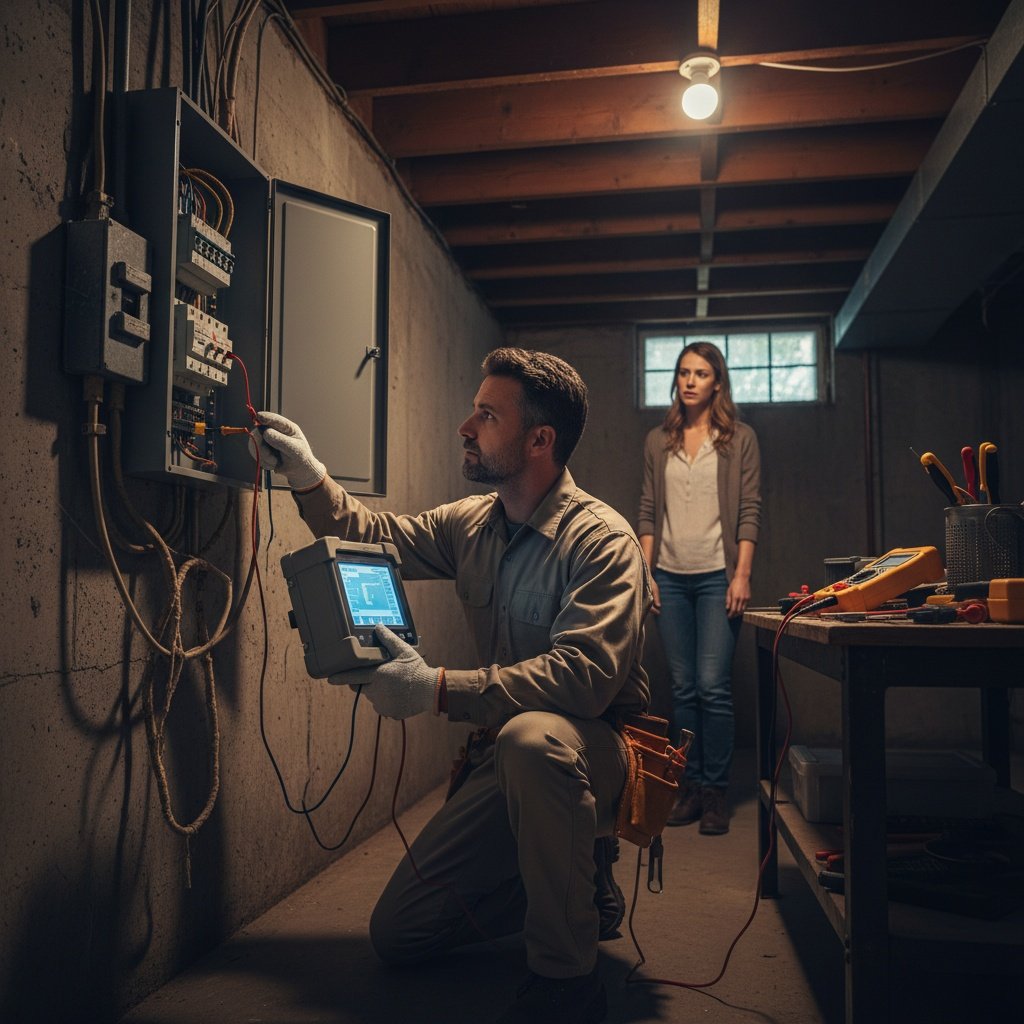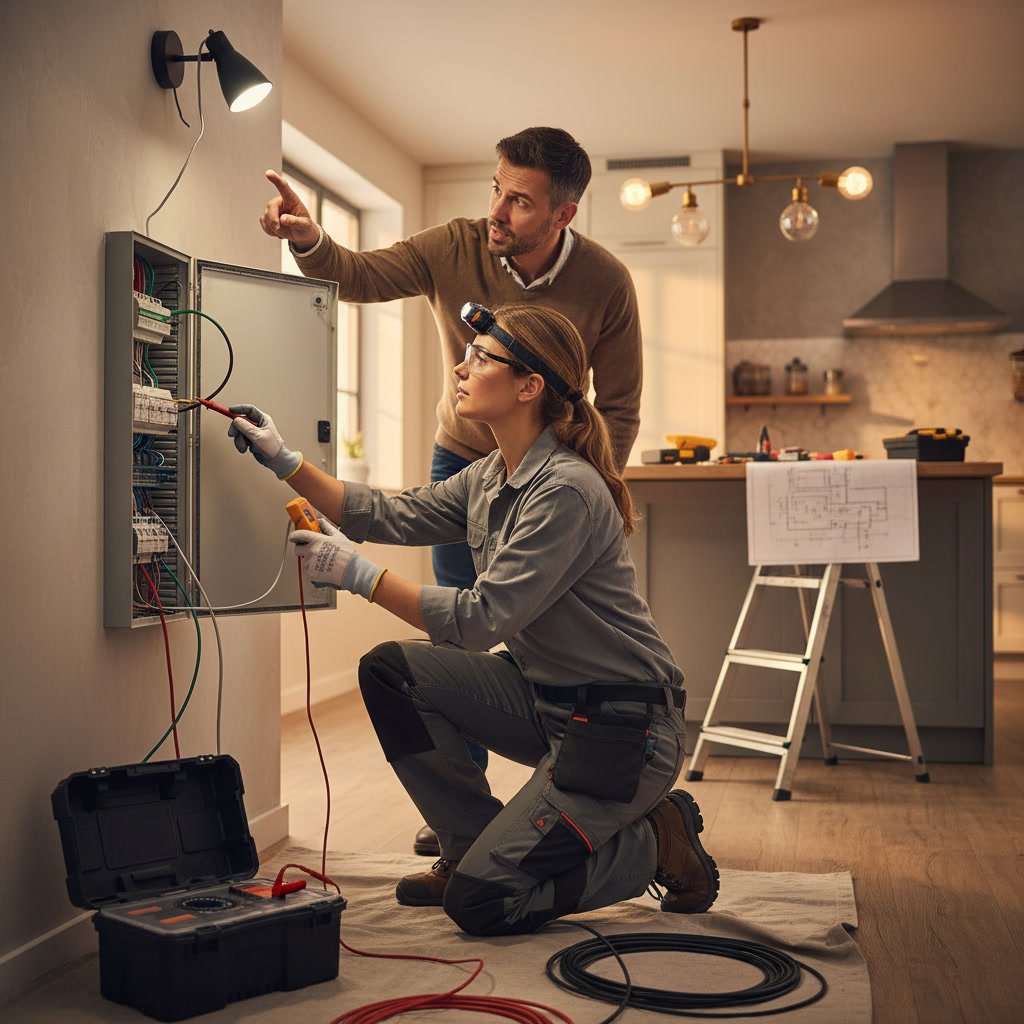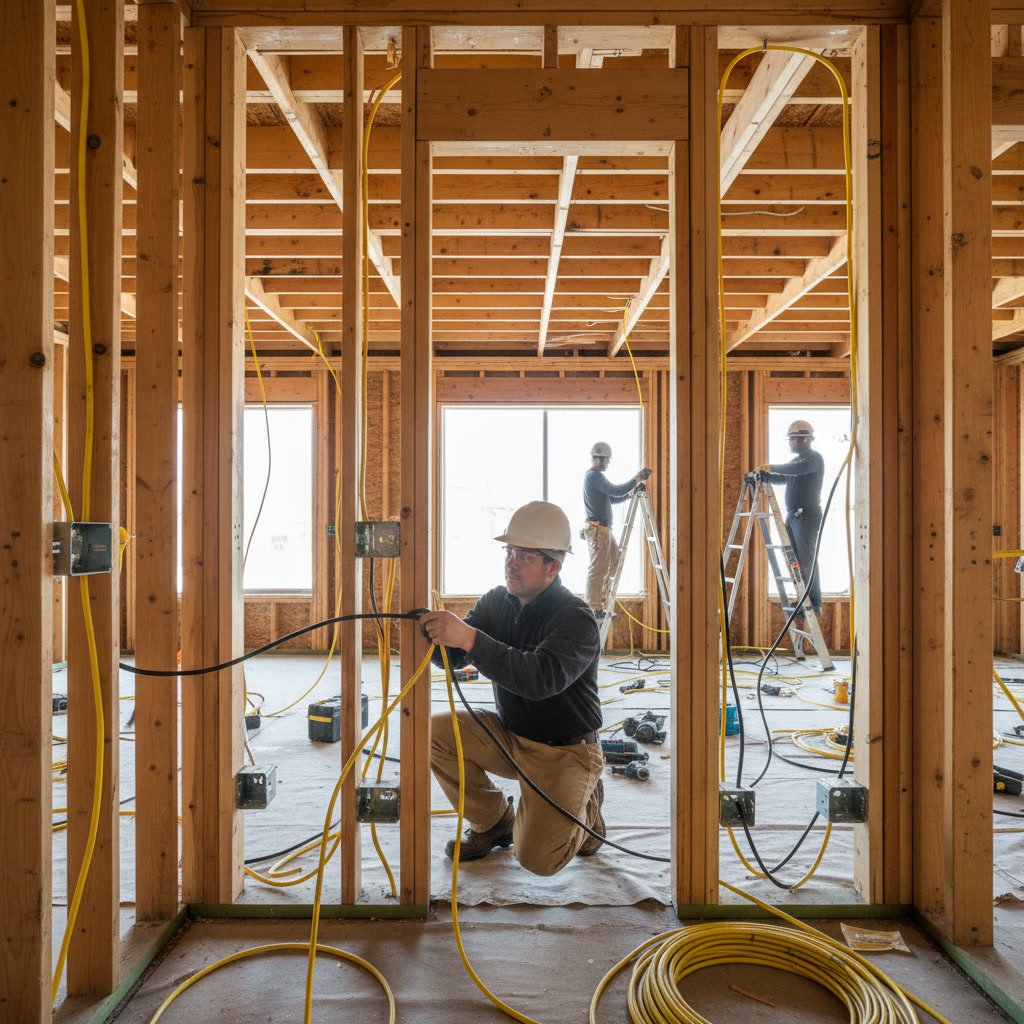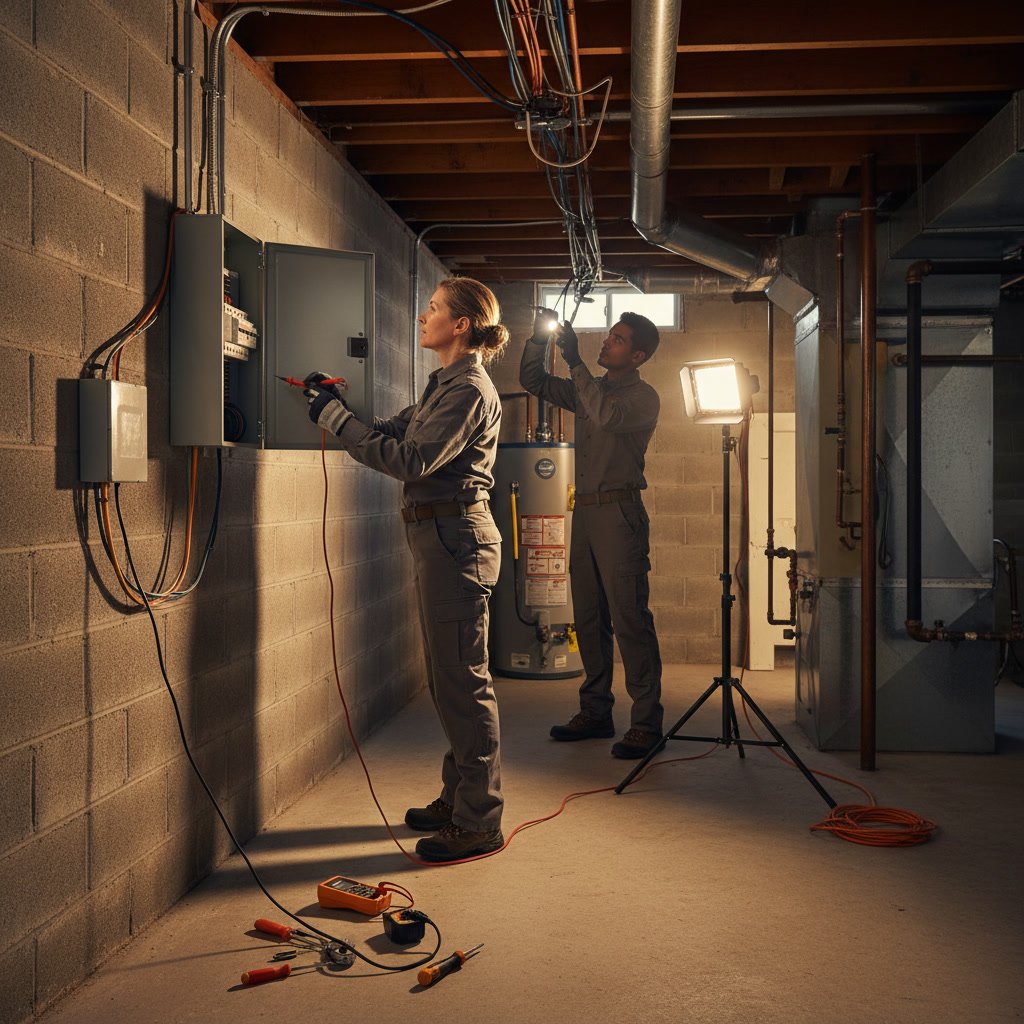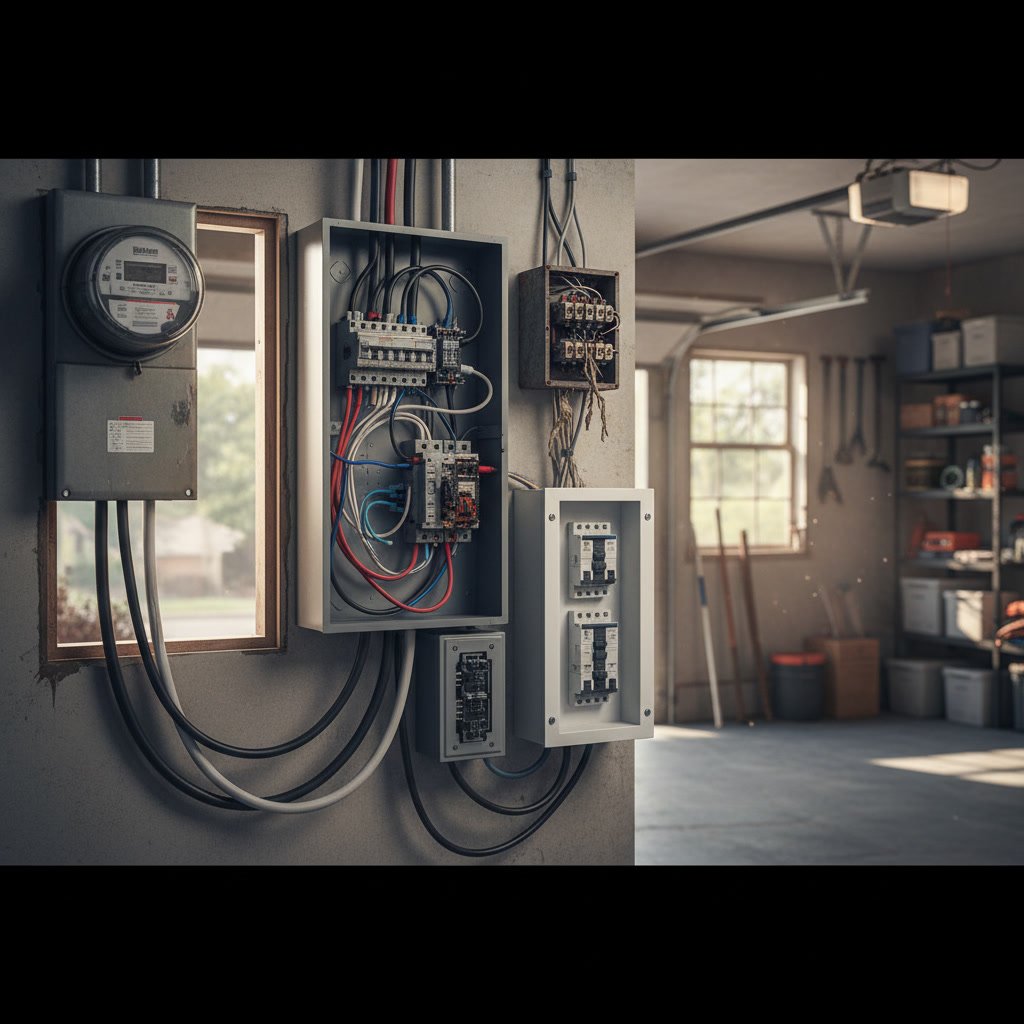
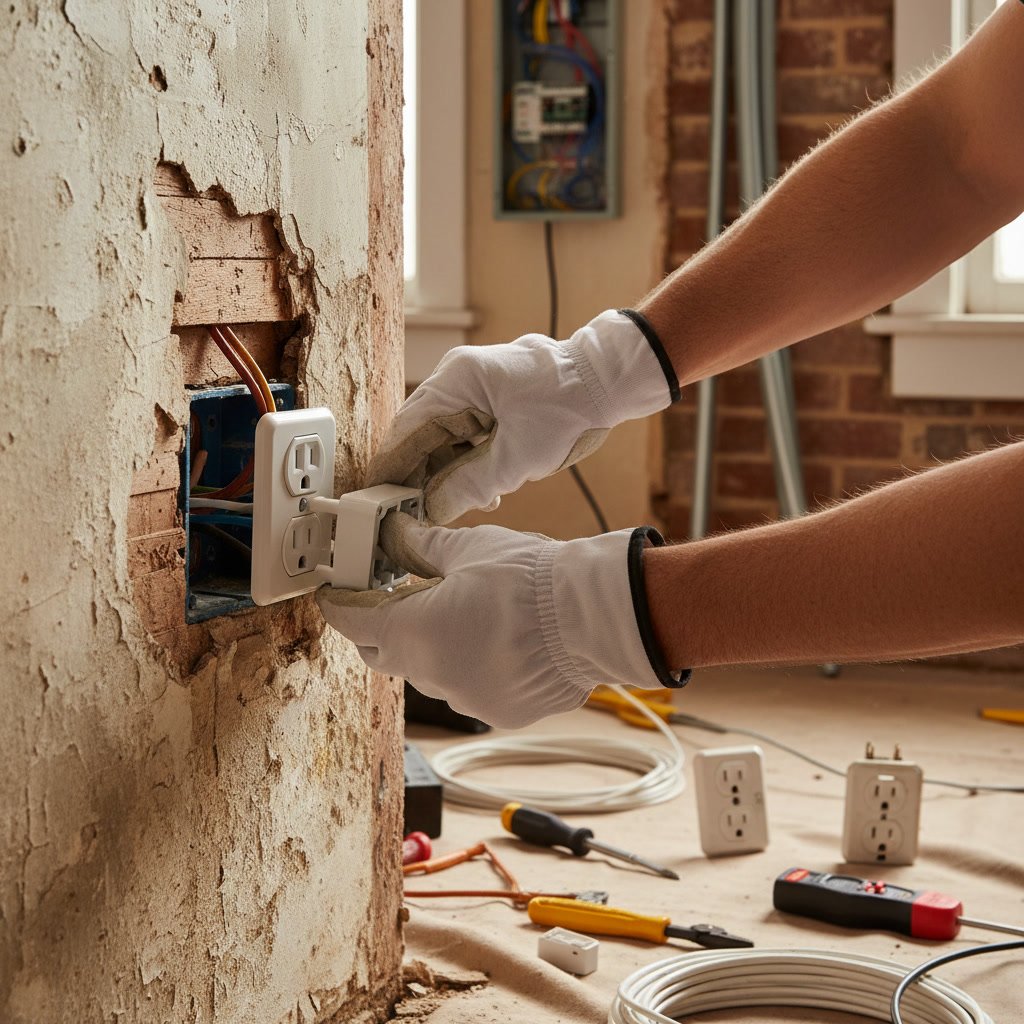
Older homes built before 1970 often have outdated two-prong outlets that lack grounding, pose shock and fire hazards, and cannot safely power modern electronics and appliances. To safely upgrade electrical outlets, you should verify power is off at the breaker, check for aluminum wiring or other hazards, install GFCI outlets in wet areas, and ensure proper grounding throughout. Because older homes may have outdated wiring systems or inadequate electrical panels, a licensed electrician should evaluate your system before making changes.
Why Older Homes Have Different Electrical Systems
Homes built in the 1950s through 1970s were wired for far fewer electrical demands than we have today. Back then, a typical household might have had one television, a few lamps, and basic kitchen appliances. The electrical code required only two-prong outlets without grounding in most rooms, and many homes ran on 60-amp or 100-amp service panels.
Modern households use exponentially more electricity with computers, smart home devices, large refrigerators, microwaves, and multiple phone chargers running simultaneously. These higher demands stress old wiring and create safety issues when you plug three-prong devices into ungrounded two-prong outlets using adapters.
Warning Signs Your Outlets Need Immediate Replacement
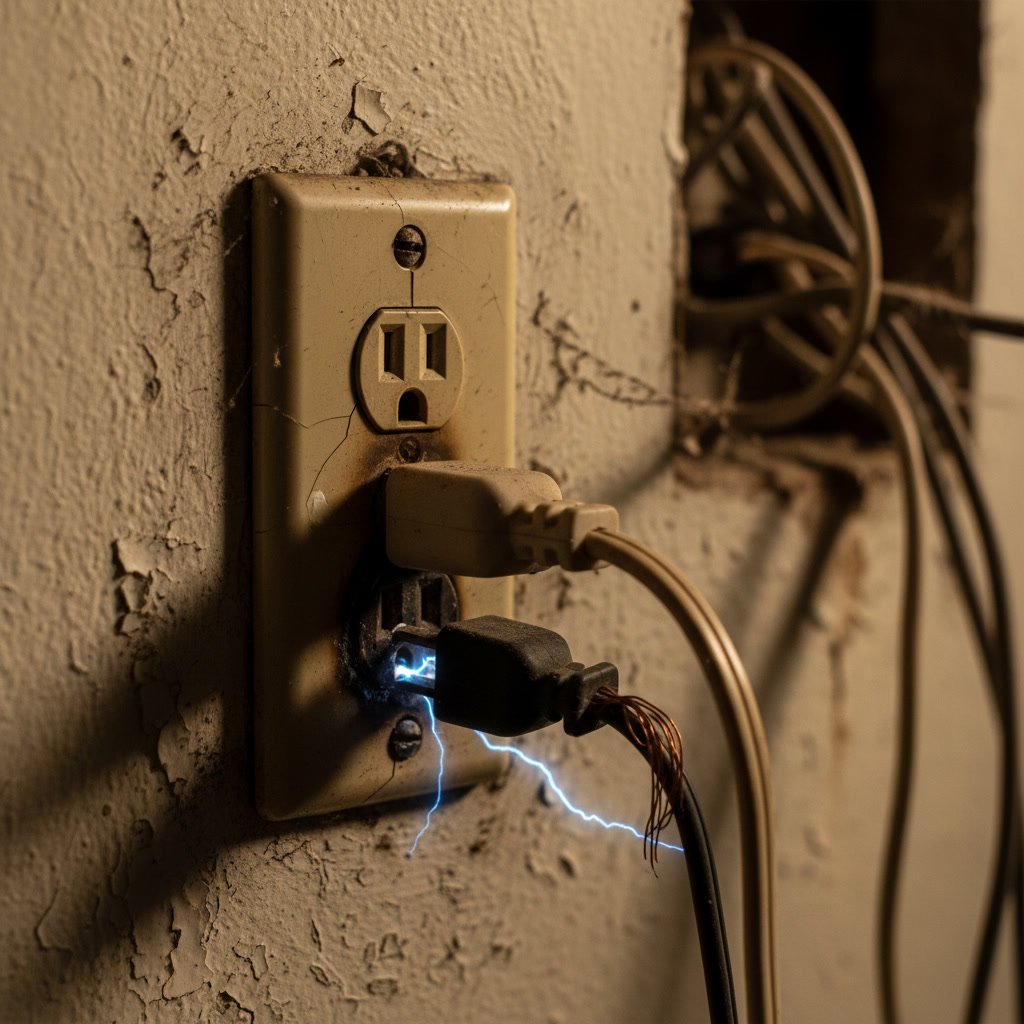
Several clear indicators tell you when outlets have become unsafe. If you notice scorch marks, discoloration, or melted plastic around outlet faces, stop using them immediately and call an electrician. These signs indicate overheating or arcing that could start a fire.
Outlets that feel warm to the touch, spark when you plug devices in, or don’t hold plugs securely also need replacement. If circuit breakers trip frequently when you use certain outlets, or if lights dim when you plug in appliances, your electrical system is struggling and needs professional assessment.
Understanding Grounding and Why It Matters
Grounding provides a safe path for electricity to follow if a wire comes loose or a device malfunctions. Without grounding, that electricity can travel through you instead, causing serious injury or death. Two-prong outlets lack this critical safety feature.
Three-prong outlets include a ground wire that connects to your home’s grounding system, typically through a ground rod driven into the earth or a metal water pipe. Before you install three-prong outlets, an electrician must verify that your electrical box has a proper ground wire. Simply installing three-prong outlets without actual grounding creates a false sense of security and violates electrical code.
The Hidden Dangers of Aluminum Wiring in Greenville Area Homes
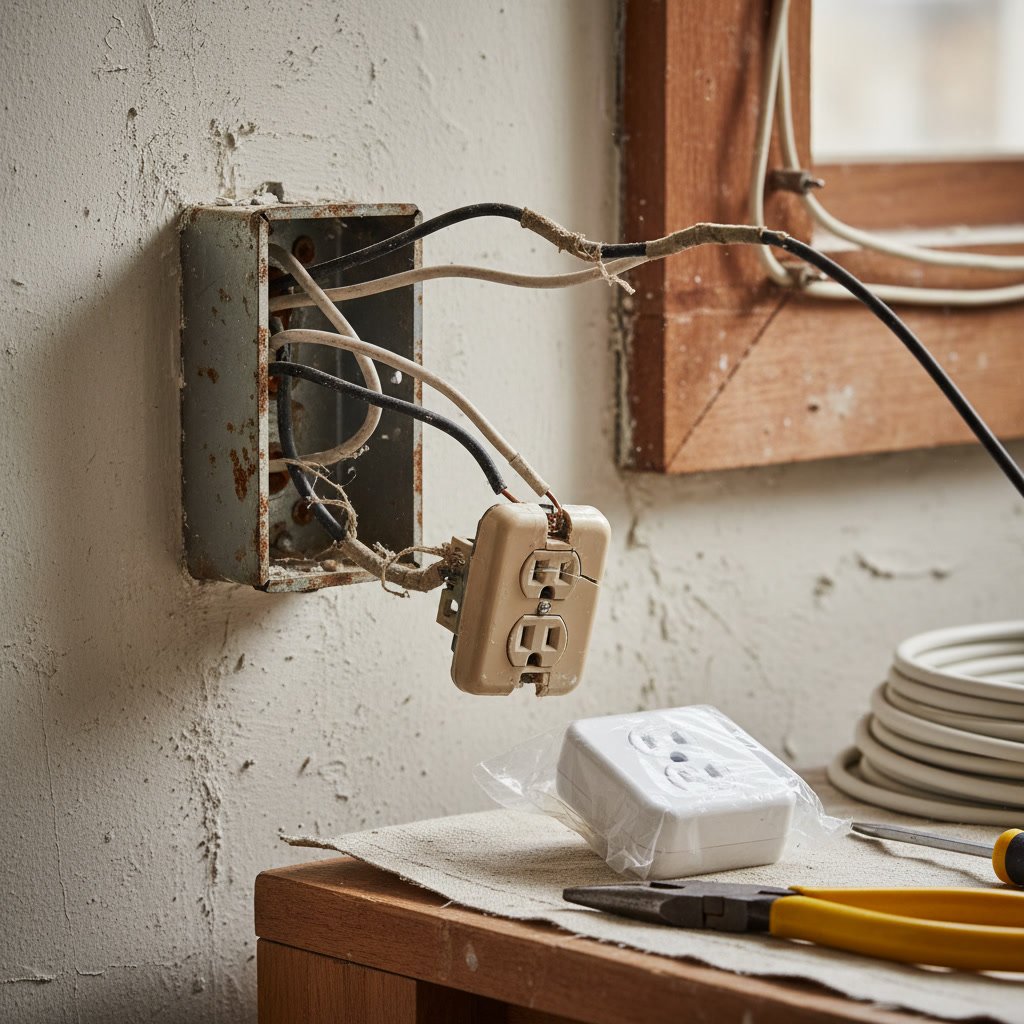
Many homes built between 1965 and 1973 contain aluminum wiring instead of copper. While aluminum itself isn’t inherently dangerous, it expands and contracts more than copper as it heats and cools. This movement can loosen connections at outlets over time, creating resistance that generates heat and potentially starts fires.
If your home has aluminum wiring, you cannot simply replace outlets with standard devices. You need special outlets rated for aluminum wire, or a professional must retrofit connections using approved methods like COPALUM crimps or AlumiConn connectors. Opening an outlet box and discovering aluminum wire is a clear signal to stop and call a licensed electrician.
GFCI and AFCI Protection Requirements
Modern electrical code requires ground fault circuit interrupter (GFCI) protection in areas with water exposure, including bathrooms, kitchens within six feet of sinks, laundry rooms, garages, and outdoor outlets. GFCI outlets detect electrical imbalances and shut off power in milliseconds, preventing electrocution.
Arc fault circuit interrupter (AFCI) protection is now required in bedrooms and most living areas in new construction and major remodels. AFCI breakers detect dangerous electrical arcing and prevent fires. When working on older homes, electricians often recommend installing both types of protection even if code doesn’t strictly require retrofitting, because the safety benefits far outweigh the modest additional cost.
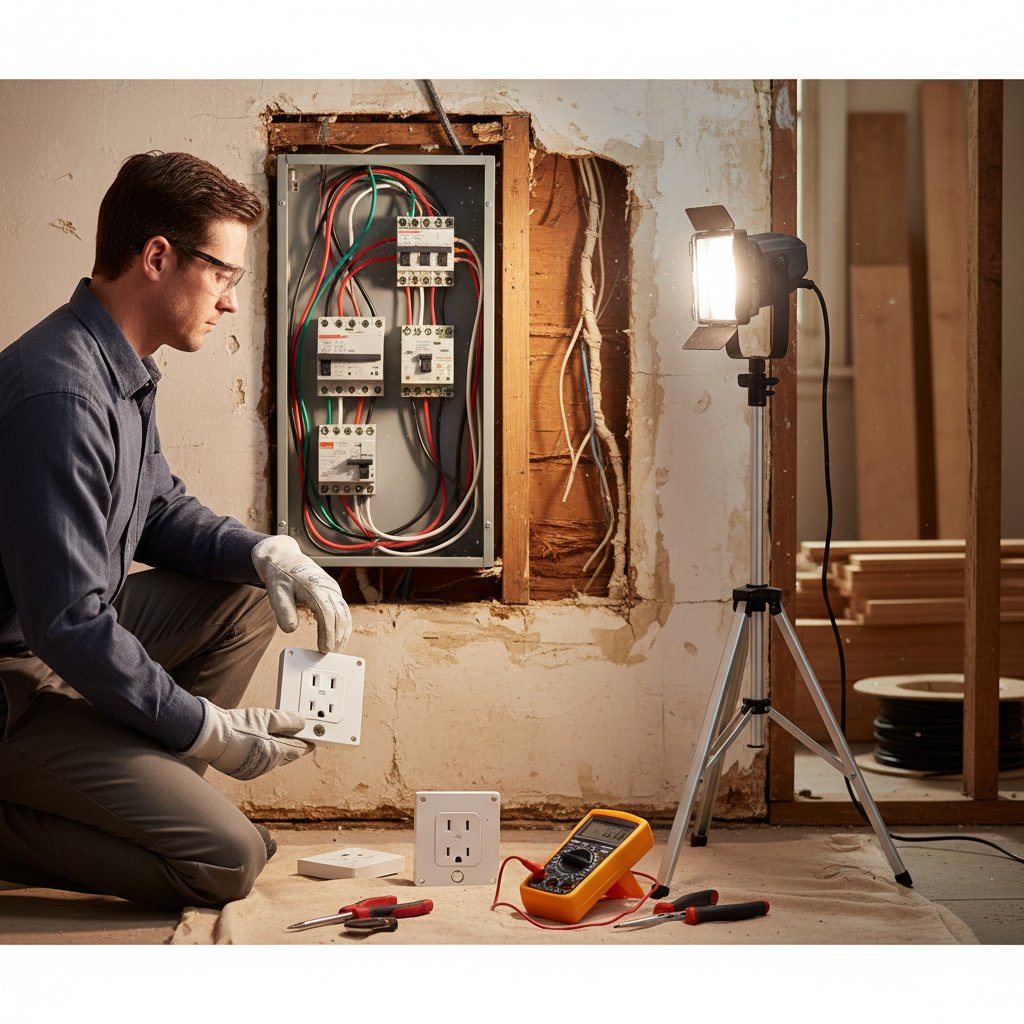
Step-by-Step Safety Process for Outlet Upgrades
The safe upgrade process begins at the electrical panel, not at the outlet. First, identify the correct breaker for the circuit you’re working on by testing outlets with a voltage tester after turning breakers off one at a time. Label the breaker clearly.
Second, use a non-contact voltage tester at the outlet itself to confirm power is completely off. Never rely solely on a breaker switch. Third, remove the old outlet and photograph the existing wire connections before disconnecting anything. Fourth, inspect the electrical box, wiring condition, and wire type. If you see damaged insulation, aluminum wiring, cloth-covered wiring, or knob-and-tube wiring, stop immediately and contact a professional.
Fifth, if wiring appears safe and is copper, connect the new outlet following manufacturer instructions, ensuring hot wires connect to brass screws, neutral wires to silver screws, and ground wires to green screws. Sixth, carefully fold wires back into the box without pinching or kinking them. Seventh, secure the outlet and cover plate, restore power, and test with a plug-in outlet tester to verify correct wiring.
When DIY Becomes Dangerous
Many homeowners feel confident tackling simple outlet replacement, but older homes present complications that require professional expertise. If your home was built before 1970, has never had service upgrades, or shows any signs of outdated wiring, an electrician should evaluate the system first.
You should never attempt electrical work if you find aluminum wiring, knob-and-tube wiring, cloth-covered wiring, or any wiring with damaged insulation. These conditions require specialized knowledge and techniques. Similarly, if your electrical panel is a Federal Pacific or Zinsco brand, both known for safety defects, you need a professional assessment before making any electrical changes.
The Role of Electrical Box Condition
The electrical box that houses the outlet must be in good condition and properly secured. Older homes often have metal boxes that have rusted, or boxes that have worked loose from wall studs. A loose or damaged box cannot safely support an outlet and may allow dangerous wire contact with metal framing.
Modern outlets also require boxes with sufficient depth and volume to accommodate wiring. If your existing box is too shallow or too small, you cannot legally or safely install a new outlet without replacing the box. This work requires cutting into walls and is best handled by professionals who specialize in remodels and upgrades.
Whole-House Considerations Beyond Individual Outlets
Replacing a few outlets addresses immediate safety concerns in specific locations, but older homes often need comprehensive electrical updates. If you’re planning to upgrade multiple outlets, consider whether your electrical panel can handle modern loads. Many older panels lack capacity for additional circuits or safety features like whole-house surge protection.
A professional electrical evaluation can identify whether you need panel upgrades, additional circuits, or complete rewiring in certain areas. This assessment prevents a situation where you’ve invested in new outlets but your underlying electrical system remains inadequate. Understanding signs your home needs a full electrical service upgrade helps you make informed decisions about where to invest your budget.
Smart Home Integration During Outlet Upgrades
If you’re already upgrading outlets, consider integrating smart home upgrades that add convenience and energy savings. Smart outlets allow you to control devices remotely, monitor energy usage, and set schedules for lights and appliances. USB outlets eliminate bulky adapters and provide convenient charging stations.
Weather-resistant outlets with built-in covers improve outdoor safety and comply with current code requirements for exterior locations. Installing the right outlet types during your upgrade project future-proofs your home and maximizes the value of the work.
Professional Assessment Protects Your Investment
Upgrading outlets in an older home involves more than swapping devices. Your electrical system is interconnected, and changes in one area affect the entire network. Maccripine Electric Service LLC brings over 18 years of experience working with older homes and understands the unique challenges they present.
Professional electricians carry specialized tools like thermal imaging cameras that detect hidden hot spots behind walls, advanced testers that verify proper grounding and polarity, and knowledge of code requirements that have evolved over decades. This expertise ensures your upgrades meet safety standards and function reliably for years.
A comprehensive electrical assessment identifies immediate hazards, recommends priority upgrades, and provides a roadmap for bringing your home’s electrical system up to modern standards. Whether you need a few repairs or extensive updates, knowing the full scope helps you plan effectively and avoid costly surprises.
Making Your Older Home Safer Today
Outlet upgrades are among the most important safety improvements you can make to an older home. Properly grounded outlets with GFCI protection in wet areas dramatically reduce shock and fire risks. Taking time to assess your entire electrical system ensures upgrades deliver maximum safety benefits rather than creating new problems.
Remember that electrical work carries serious risks when done incorrectly, and older homes add layers of complexity that even experienced DIYers may not anticipate. When in doubt, professional evaluation provides peace of mind and protects your family.
Maccripine Electric Service LLC serves homeowners throughout the Greenville area who need reliable electrical upgrades and safety improvements. Our team evaluates your existing system, explains your options clearly, and performs work that meets all code requirements while fitting your budget. Contact us at +12528135015 to schedule an electrical safety assessment and get expert guidance on upgrading your home’s outlets safely.