Your farm’s electrical demands have grown. New equipment, automated systems, irrigation controllers, and climate-controlled barns all need reliable power. If your breakers trip frequently or you can’t run multiple pieces of equipment simultaneously, your electrical service may be the bottleneck. A farm electrical service upgrade to 200 amps can solve these issues, but the preparation work determines whether the project goes smoothly or turns into a costly disruption.
This guide walks you through every step of preparing your agricultural property for a 200 amp service upgrade, from initial planning to final inspection. You’ll learn what information to gather, which upgrades to consider at the same time, and how to minimize downtime during the installation.
Why Farms Need 200 Amp Service
Modern agricultural operations demand significantly more electrical capacity than systems installed 20 or 30 years ago. A 100 amp service that once powered basic lighting and a few motors now struggles with today’s electrical loads.
Consider the typical power requirements on a working farm. A three-phase irrigation pump can draw 30 to 50 amps during operation. Climate control systems for livestock barns add another 40 to 60 amps. Workshop tools, welders, and processing equipment each require dedicated circuits with substantial amperage.
A 200 amp service provides the capacity to run these systems simultaneously without voltage drops or breaker trips. It also leaves headroom for future expansion, whether you’re adding grain dryers, refrigeration units, or electric vehicle charging stations.
Beyond capacity, newer service panels offer better surge protection, ground fault protection, and circuit organization. These safety features protect both your equipment and your personnel from electrical hazards.
Document Your Current Electrical System
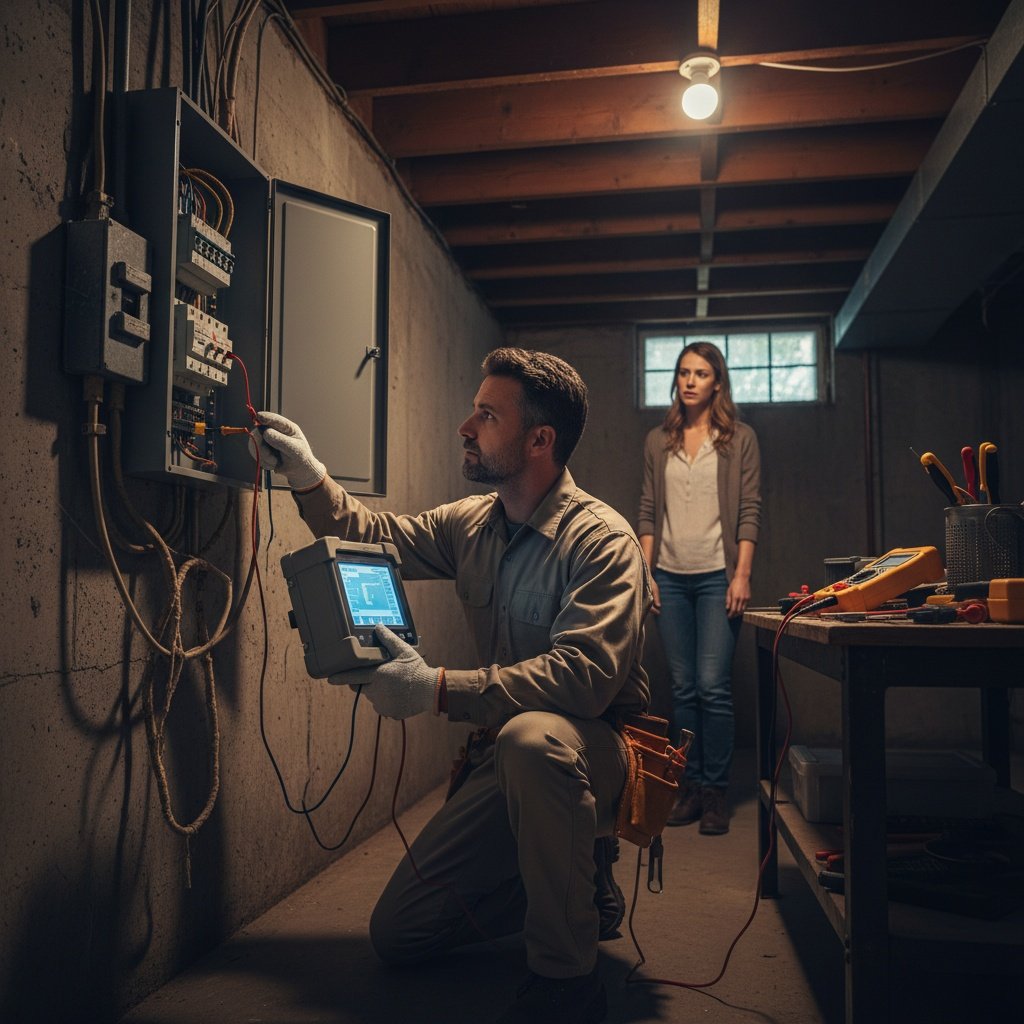
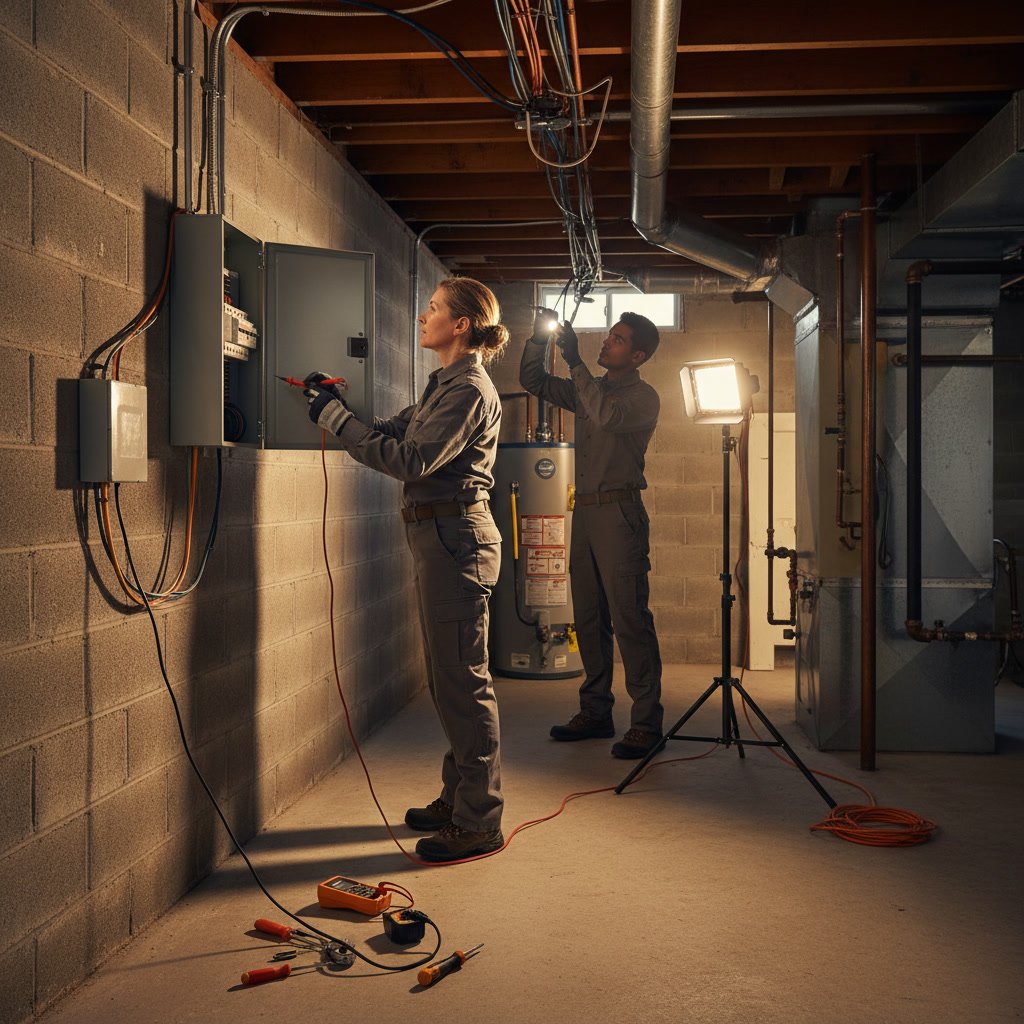
Before any farm electrical service upgrade begins, you need a complete picture of your existing system. This documentation helps electricians plan the upgrade and ensures nothing gets overlooked.
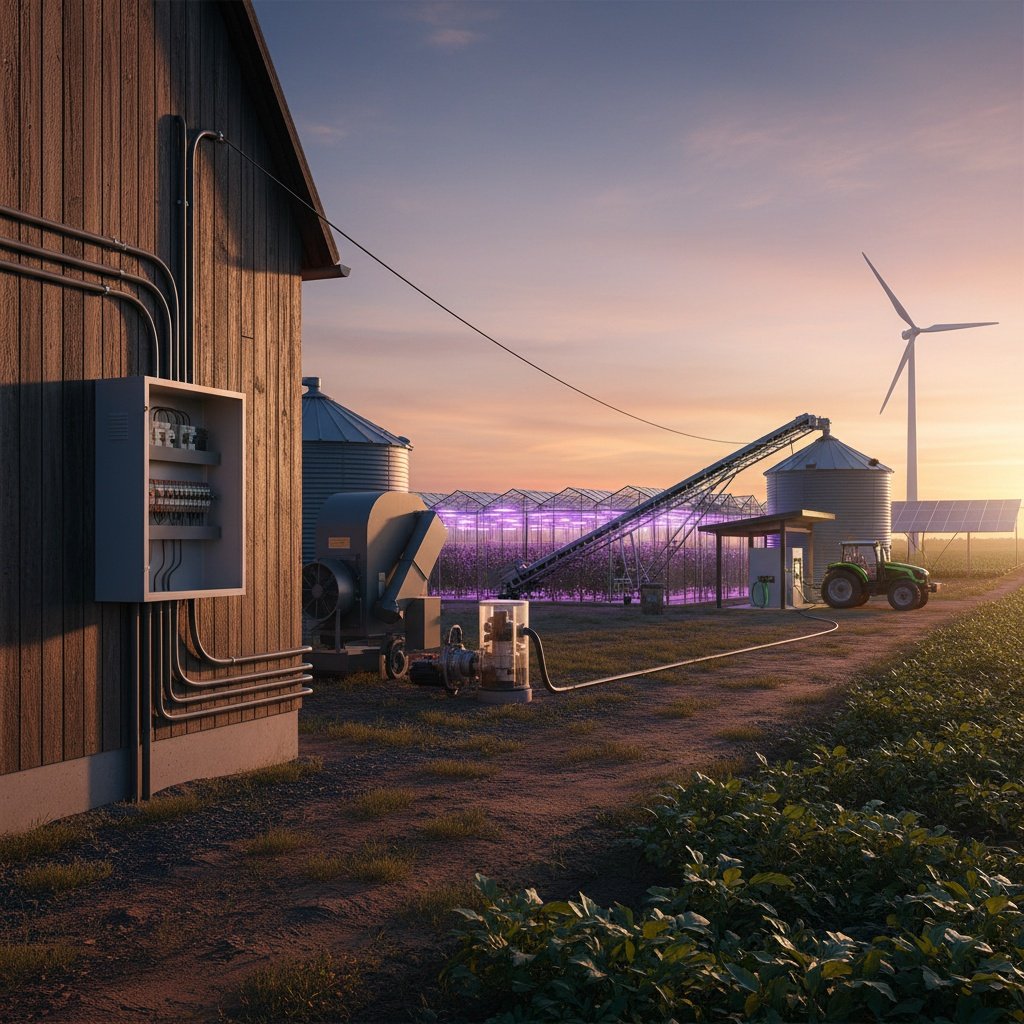
Start by locating your main service panel and any sub-panels on the property. Note the amperage rating of your current service, typically found on the main breaker. Most older farm services range from 60 to 100 amps.
Create an Equipment Inventory
List every piece of electrical equipment on your farm, including motors, heaters, pumps, and lighting systems. Record the amperage or wattage for each item, found on the equipment nameplate. This inventory becomes the foundation for load calculations.
Pay special attention to equipment that runs simultaneously during peak operations. Harvest season, farrowing periods, or irrigation cycles often represent your highest electrical demand. These peak loads determine your service requirements.
Identify Problem Areas
Document any existing electrical issues. Do certain breakers trip regularly? Are there areas with insufficient outlets? Does voltage drop when large motors start? These problems indicate undersized circuits or capacity issues that the upgrade should address.
Take photos of your current panel layout and any visible wiring issues. This visual record helps electricians understand your system’s condition and age.
Contact Your Utility Company Early
Your electric utility must approve and support any service upgrade. Contact them at least 30 to 60 days before your planned upgrade date. Some utilities have lengthy approval processes or limited crew availability.
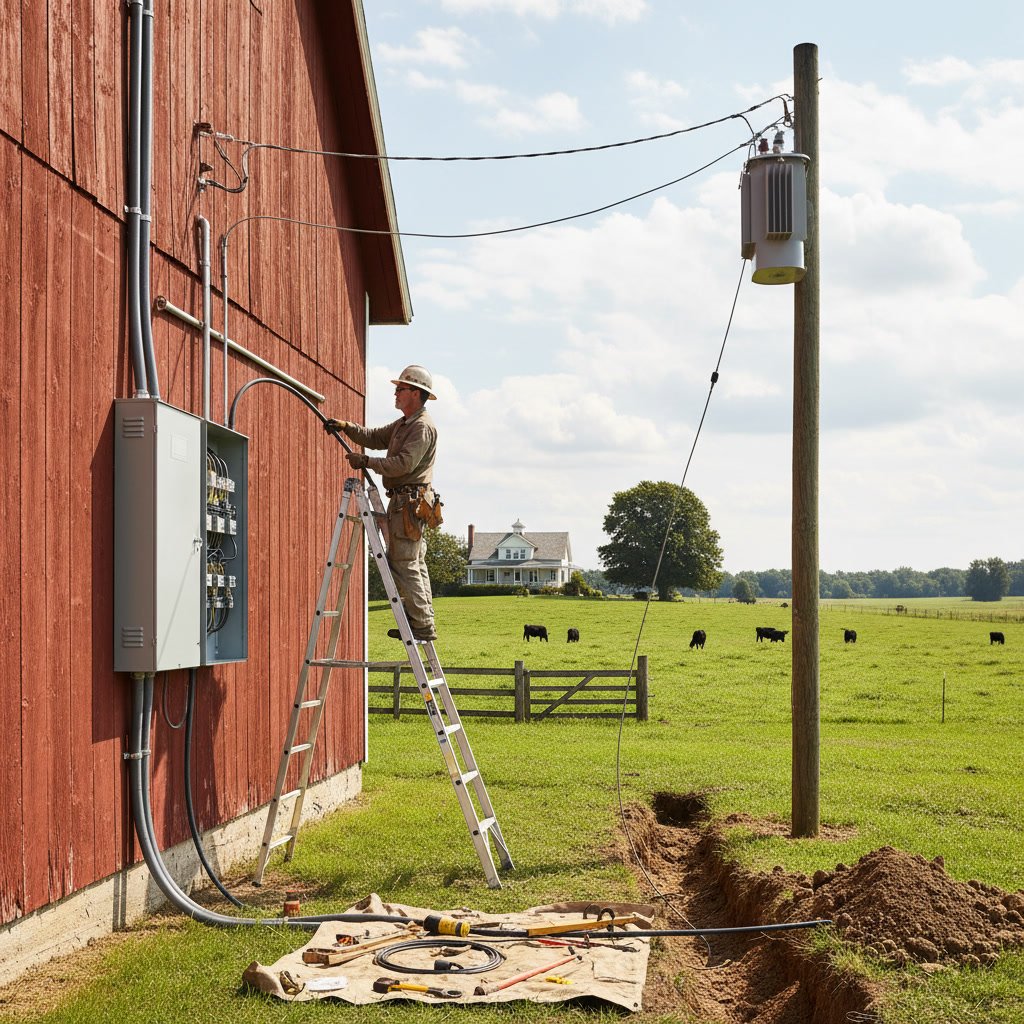
The utility will inspect their infrastructure to confirm it can support 200 amp service. In rural areas around Fountain, Farmville, and Snow Hill, this may require transformer upgrades or new service lines from the pole to your meter.
Ask about their requirements for meter base location, service entrance conductors, and grounding systems. Utilities often have specific standards that differ from general electrical codes. Meeting these requirements upfront prevents delays during final inspection.
Request an estimate for any utility-side costs. While you pay for the service panel and wiring on your property, the utility may charge for transformer upgrades, new service drops, or extended trenching.
Pro Tip: Schedule your utility coordination for the off-season when possible. Spring planting and fall harvest periods often coincide with high demand for utility services, leading to longer wait times.
Plan Your Service Panel Location
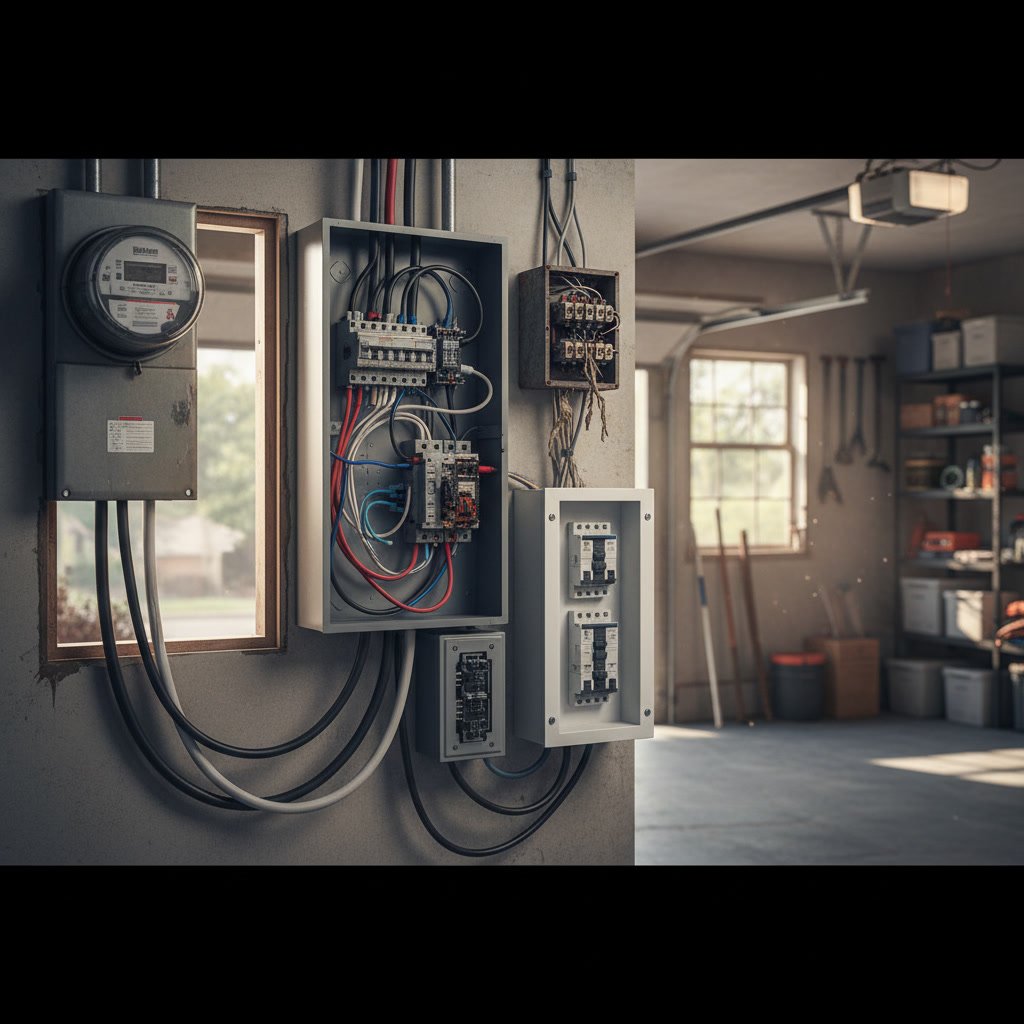
The location of your new 200 amp service panel affects both installation costs and long-term functionality. If your current panel is poorly located, an upgrade offers the opportunity to relocate it to a more practical spot.
Choose a location that provides easy access for both routine use and emergency shutoffs. The panel should be protected from weather, livestock, and farm equipment. Many farmers place the main panel in a dedicated room or covered area near the shop or main barn.
Consider Future Expansion
Think beyond your immediate needs. Leave wall space adjacent to the panel for sub-panels or additional circuits. Plan conduit pathways to areas where you might add equipment in the next five to ten years.
If you’re building new barns or adding processing facilities, locate the service panel centrally to minimize wire runs. Every 100 feet of distance adds material costs and potential voltage drop.
Ensure Code Compliance
The National Electrical Code and local amendments specify minimum clearances around service panels. You need at least 36 inches of clear space in front of the panel and 30 inches of width. The area must have adequate lighting and a solid, level working platform.
In agricultural settings, panels must be elevated or protected from flooding if located in areas prone to water accumulation. Dust, chaff, and corrosive environments like dairy barns require special panel ratings.
Bundle Related Electrical Upgrades
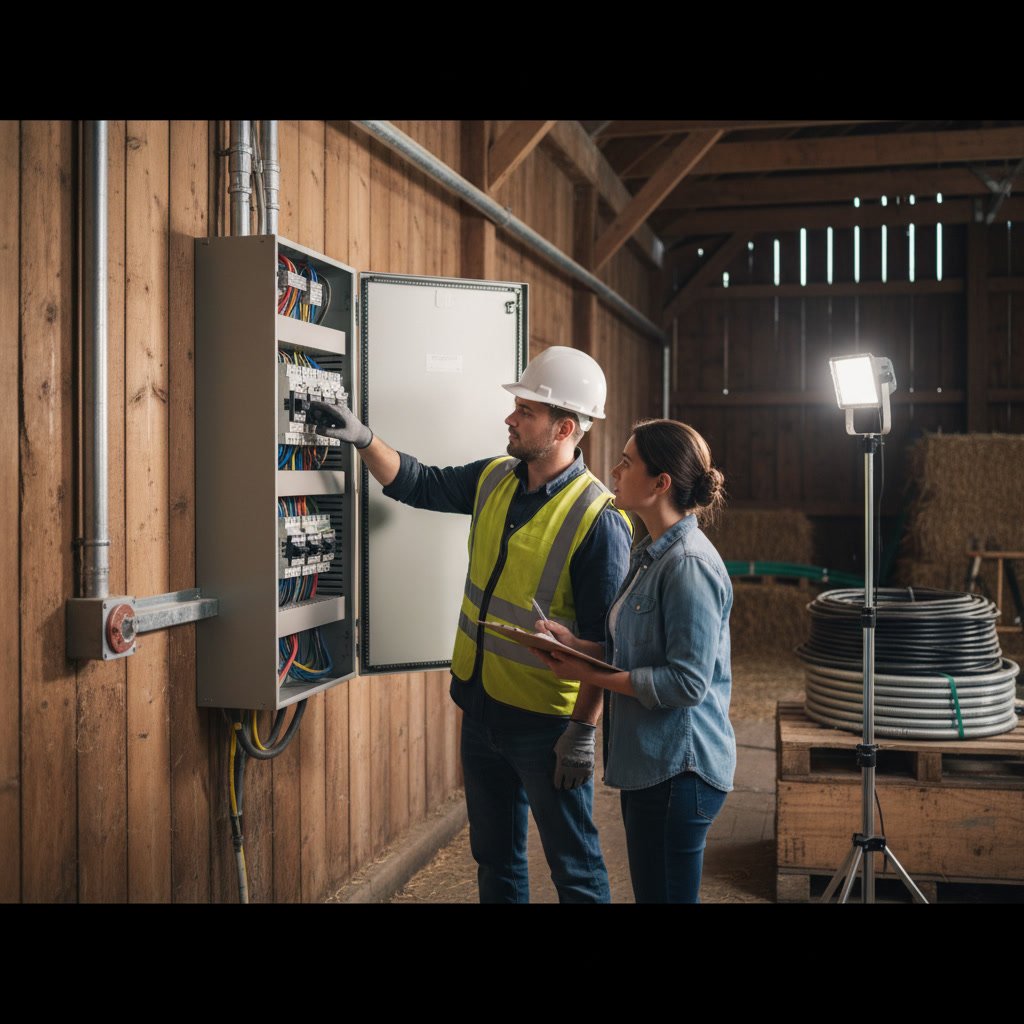
A farm electrical service upgrade creates the perfect opportunity to address other electrical needs. Combining projects saves money on permits, inspections, and labor costs.
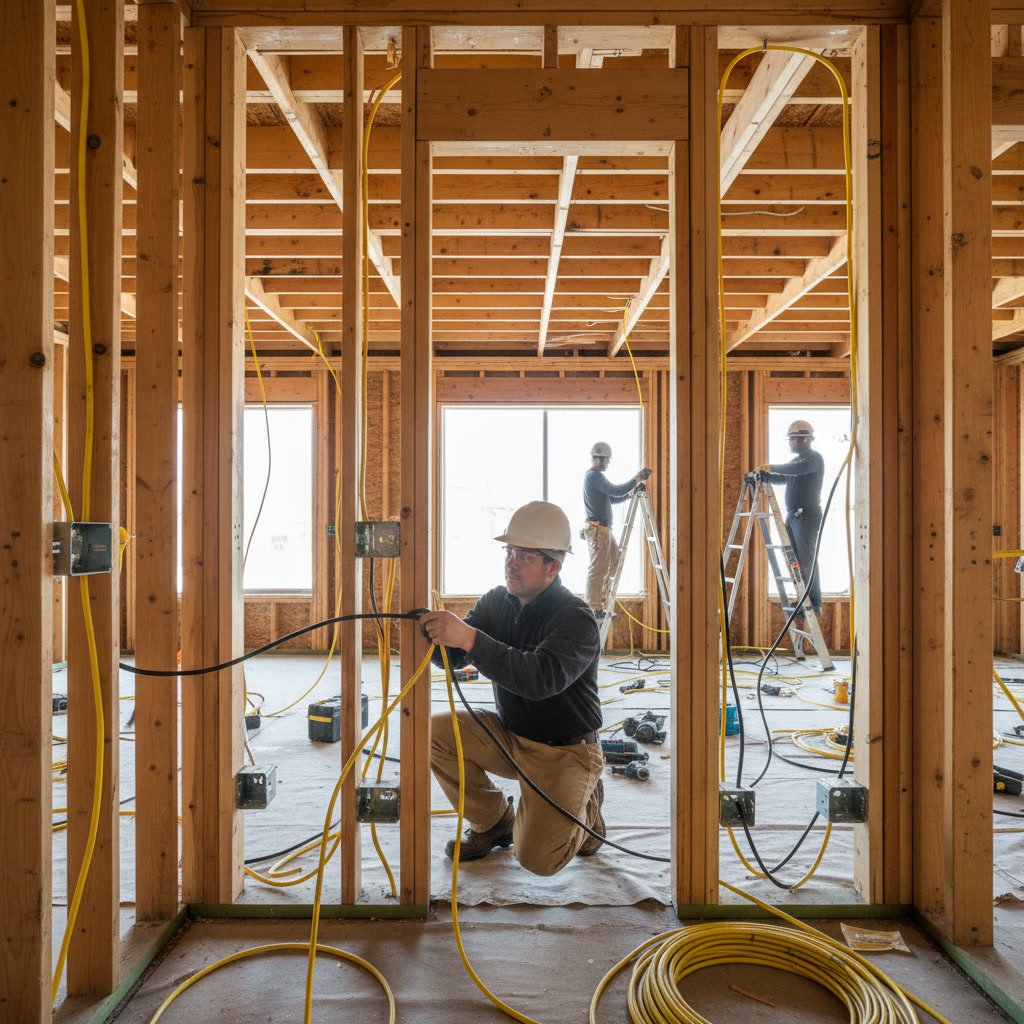
Review your equipment inventory for circuits that need upgrading. Old wiring in barns, inadequate shop circuits, or temporary extension cord setups should be properly wired during the service upgrade.
Lighting Improvements
LED lighting conversions significantly reduce electrical loads while improving visibility. Upgrading barn lighting, shop fixtures, and security lighting during your service upgrade maximizes the return on your investment.
Modern LED fixtures use 75 percent less energy than old incandescent or mercury vapor lights. This efficiency allows you to run more lights on smaller circuits, freeing capacity for equipment.
Generator Integration
If you’re considering backup power, install a generator transfer switch during the service upgrade. This avoids doubling the labor costs for panel modifications and permits.
A properly integrated generator system protects your operation during power outages. For livestock operations, maintaining ventilation, water pumps, and climate control can be critical to animal welfare and your financial investment.
Surge Protection
Whole-house surge protectors install at the main panel and protect your entire electrical system from voltage spikes. Agricultural equipment with electronic controls, variable frequency drives, and computerized systems benefits greatly from surge protection.
Lightning strikes and utility switching events cause damaging surges in rural areas. A $200 surge protector can prevent thousands of dollars in equipment damage.
Prepare the Installation Site
Physical site preparation speeds up installation and reduces labor costs. Electricians can focus on the electrical work rather than clearing space or moving obstacles.
Clear a path from the utility connection point to the new panel location. Remove stored equipment, hay bales, or vehicles that block access. If trenching is required for underground service conductors, mark any buried utilities like water lines, propane lines, or irrigation pipes.
Ensure the mounting surface is ready. Service panels require solid backing, typically plywood over studs or direct mounting to masonry. If you’re installing in an existing building, verify the wall can support the panel weight and allow for proper conduit entry points.
Plan for Service Interruption
Your power will be disconnected during the service upgrade, typically for four to eight hours depending on complexity. Schedule the work during periods of minimal farm activity when possible.
Move any animals away from work areas. Shut down and secure equipment that shouldn’t restart automatically when power returns. Empty refrigerators and freezers or have backup power ready for critical cold storage.
Communicate the outage schedule to anyone working on the farm. Coordinate with any automated systems that need manual intervention during the power loss.
Key Takeaway: Proper preparation reduces installation time by 30 to 50 percent. Every hour saved in labor translates directly to lower project costs.
Understand Permitting and Inspection Requirements
Electrical service upgrades require permits from your local building department. The permitting process ensures work meets safety codes and protects your property value.
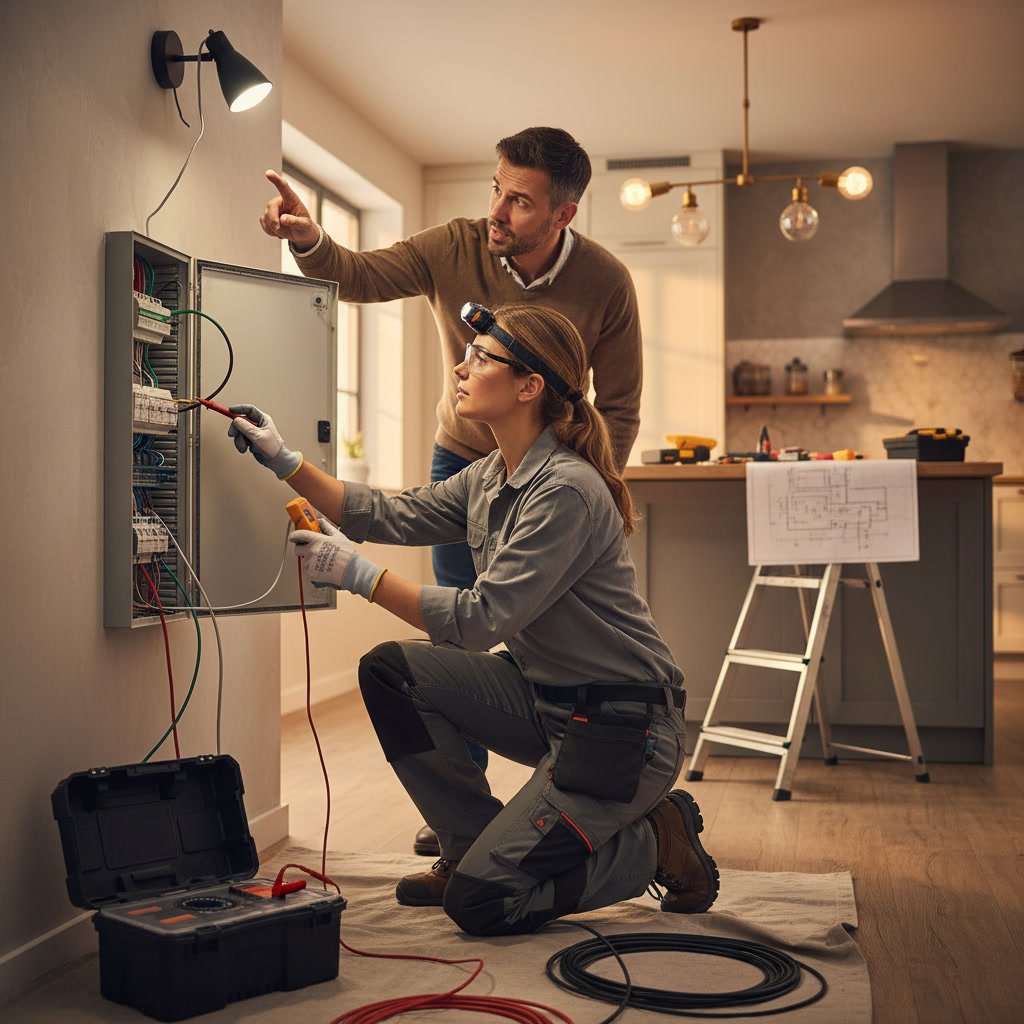
Your electrician typically handles permit applications, but you should understand the process. Permits for a farm electrical service upgrade in Pitt County, Wilson County, or Greene County generally require service panel specifications, load calculations, and a site plan showing service entrance location.
Inspection occurs after installation and before the utility connects permanent power. The inspector verifies proper grounding, correct wire sizing, adequate clearances, and code-compliant installation methods.
Allow Adequate Timeline
From initial planning to final connection, expect four to eight weeks for a complete service upgrade. This includes utility coordination (two to four weeks), permit approval (one to two weeks), installation (one to three days), and inspection scheduling (one to two weeks).
These timelines extend during peak construction seasons or if your property requires utility infrastructure upgrades. Plan accordingly if your upgrade must be complete before a specific farming operation.
Choose the Right Electrical Contractor
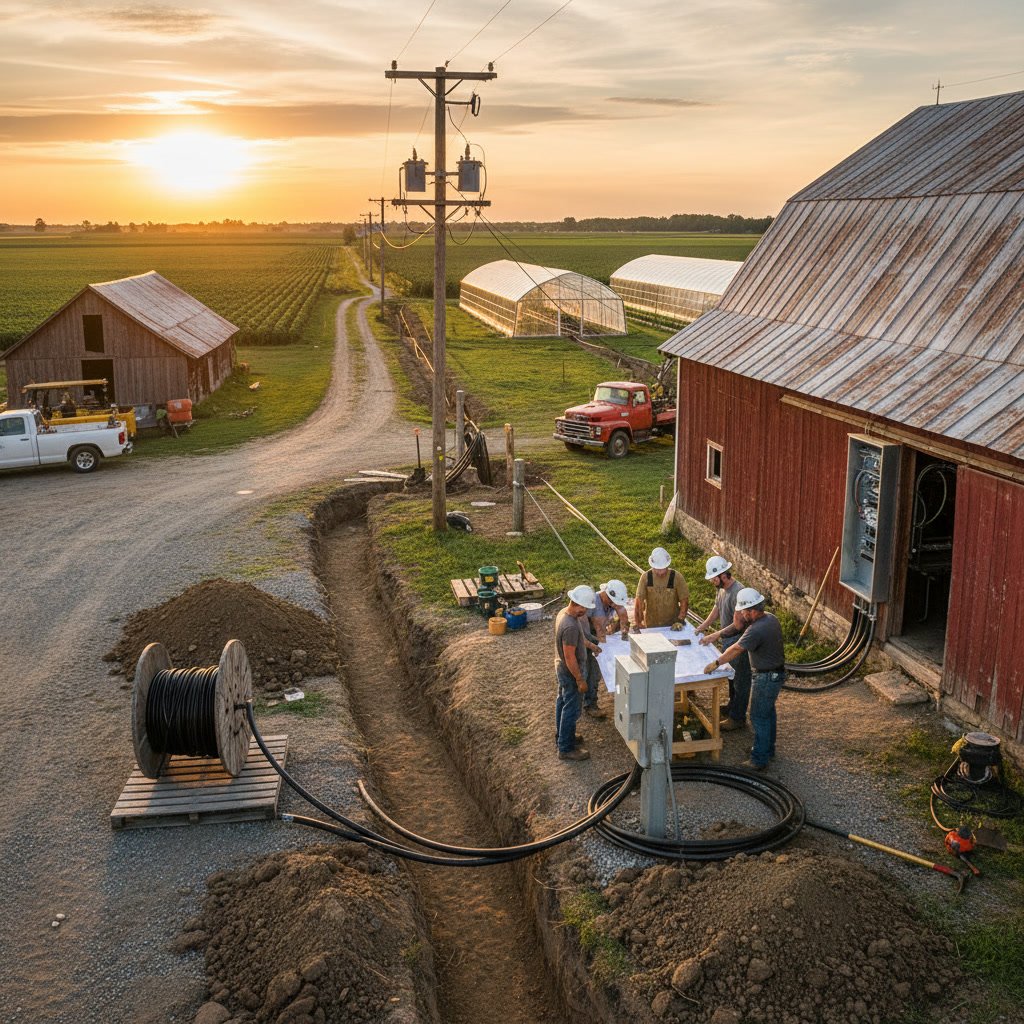
Agricultural electrical work requires specialized knowledge beyond residential experience. Farms present unique challenges with three-phase power, motor loads, outdoor wiring, and harsh environments.
Look for electricians with documented agricultural experience. Ask about previous farm projects similar to yours. A contractor who understands irrigation systems, grain handling equipment, or livestock facility requirements will anticipate issues that a purely residential electrician might miss.
Verify licensing and insurance coverage. North Carolina requires electrical contractors to hold state licenses. Confirm the license is current and verify insurance coverage that protects your property during the work.
Get Detailed Estimates
Request written estimates from at least two contractors. The estimate should itemize the service panel, meter base, conductor sizes, labor costs, permit fees, and any sub-panel or circuit work included in the project.
Compare not just price but scope of work. One contractor might include grounding upgrades or surge protection while another treats these as add-ons. Ask about warranty coverage on both materials and labor.
Discuss the timeline realistically. Weather, utility scheduling, and permit processing affect project duration. Understand what delays are possible and how the contractor communicates schedule changes.
Budget for the Complete Project
A 200 amp service upgrade typically costs between $2,500 and $6,000 depending on existing conditions, utility requirements, and the extent of related electrical work.
The service panel and meter base account for $800 to $1,500 of material costs. Conductor wire from the utility connection to the panel adds $400 to $1,200 depending on distance. Labor for a straightforward upgrade runs $1,200 to $2,500.
Additional costs include permit fees ($100 to $300), utility connection charges ($0 to $1,000), trenching for underground service ($10 to $20 per linear foot), and any sub-panel or circuit work bundled with the project.
Rural properties with long service runs or properties requiring transformer upgrades see higher costs. Difficult access, needed building modifications, or extensive grounding work also increase the budget.
Consider the upgrade an investment in your operation’s capability and safety. Proper electrical capacity prevents equipment damage from voltage issues and eliminates fire hazards from overloaded circuits.
Frequently Asked Questions
How long does a farm electrical service upgrade take to complete?
The physical installation typically takes one to three days depending on complexity. However, the complete process from initial planning through final utility connection usually spans four to eight weeks due to permit approval, utility coordination, and inspection scheduling. Weather conditions and seasonal utility workload can extend this timeline.
Can I use my existing wiring after upgrading to 200 amp service?
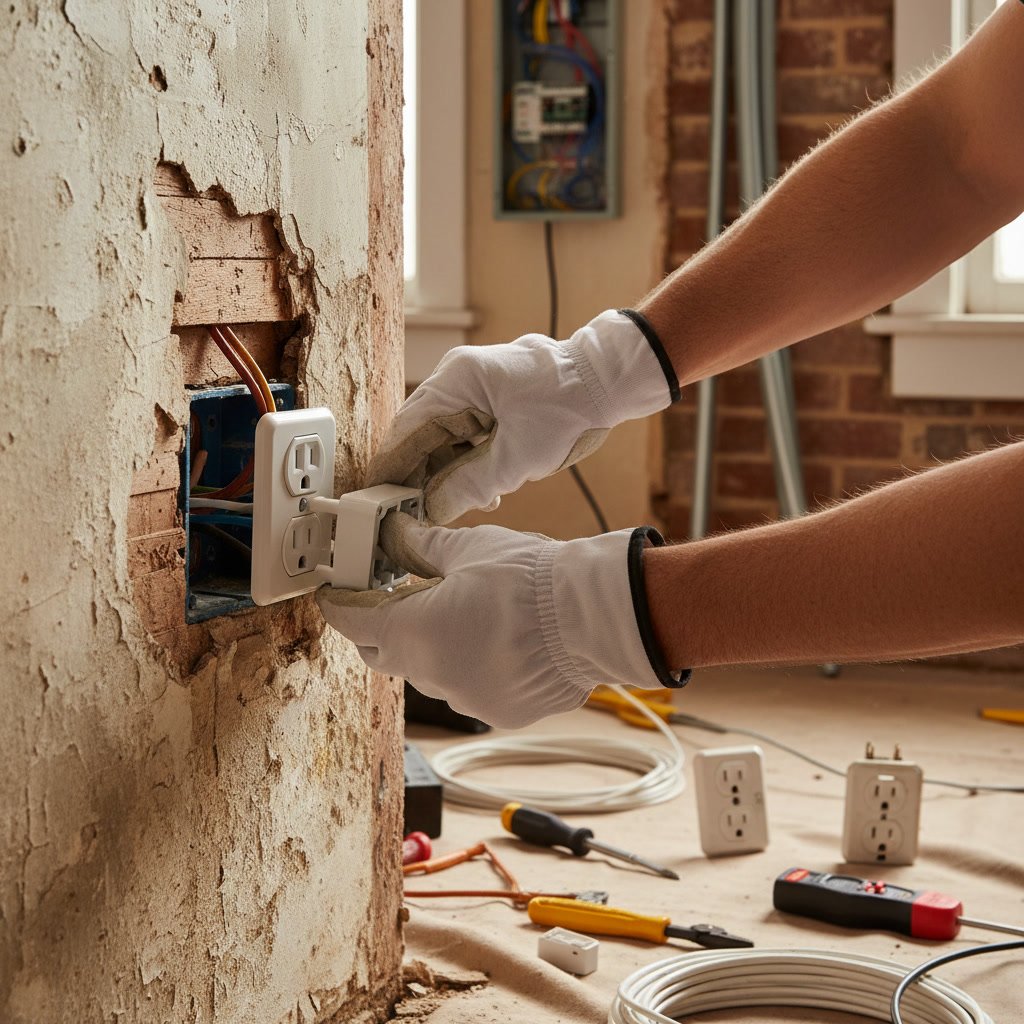
Yes, in most cases your existing branch circuits remain functional after the service upgrade. The upgrade replaces the service entrance conductors, meter base, and main panel, but individual circuits to outlets, lights, and equipment typically stay in place unless they’re undersized for their loads or fail to meet current code requirements.
Will upgrading to 200 amps increase my electric bill?
The service upgrade itself does not increase your electricity costs. You pay only for the power you actually use, not for capacity. However, the upgrade may enable you to operate more equipment efficiently, and bundling LED lighting upgrades can actually reduce your monthly costs while improving your farm’s electrical capabilities.
Do I need three-phase power for a 200 amp farm service?
Not necessarily. Many farms operate successfully on single-phase 200 amp service. Three-phase power benefits operations running large motors for irrigation, grain handling, or processing equipment. If your utility provides three-phase service to your location and you have motors over five horsepower, three-phase becomes more cost-effective for equipment operation.
What happens if my utility requires infrastructure upgrades?
If your utility determines their transformer or service lines need upgrading to support 200 amps, they typically handle this work at their expense in most service territories. However, extended trenching on your property, relocating the meter location, or upgrading from overhead to underground service may involve cost-sharing. Discuss these potential charges with your utility during the initial consultation.
Taking the Next Step
A farm electrical service upgrade to 200 amps enhances your operation’s safety, efficiency, and growth potential. Proper preparation ensures the project proceeds smoothly with minimal disruption to your daily activities. Document your current system, coordinate with your utility early, and choose an electrician with agricultural experience to handle the specialized requirements of farm electrical work.
Maccripine Electric Service LLC brings over 18 years of experience to agricultural electrical projects throughout Fountain, Greenville, Farmville, Winterville, and surrounding Eastern North Carolina communities. From initial planning through final inspection, their expertise in farm electrical systems ensures your upgrade meets both code requirements and the practical demands of agricultural operations. Contact them at +12528135015 to discuss your farm electrical service upgrade and receive a detailed project estimate.